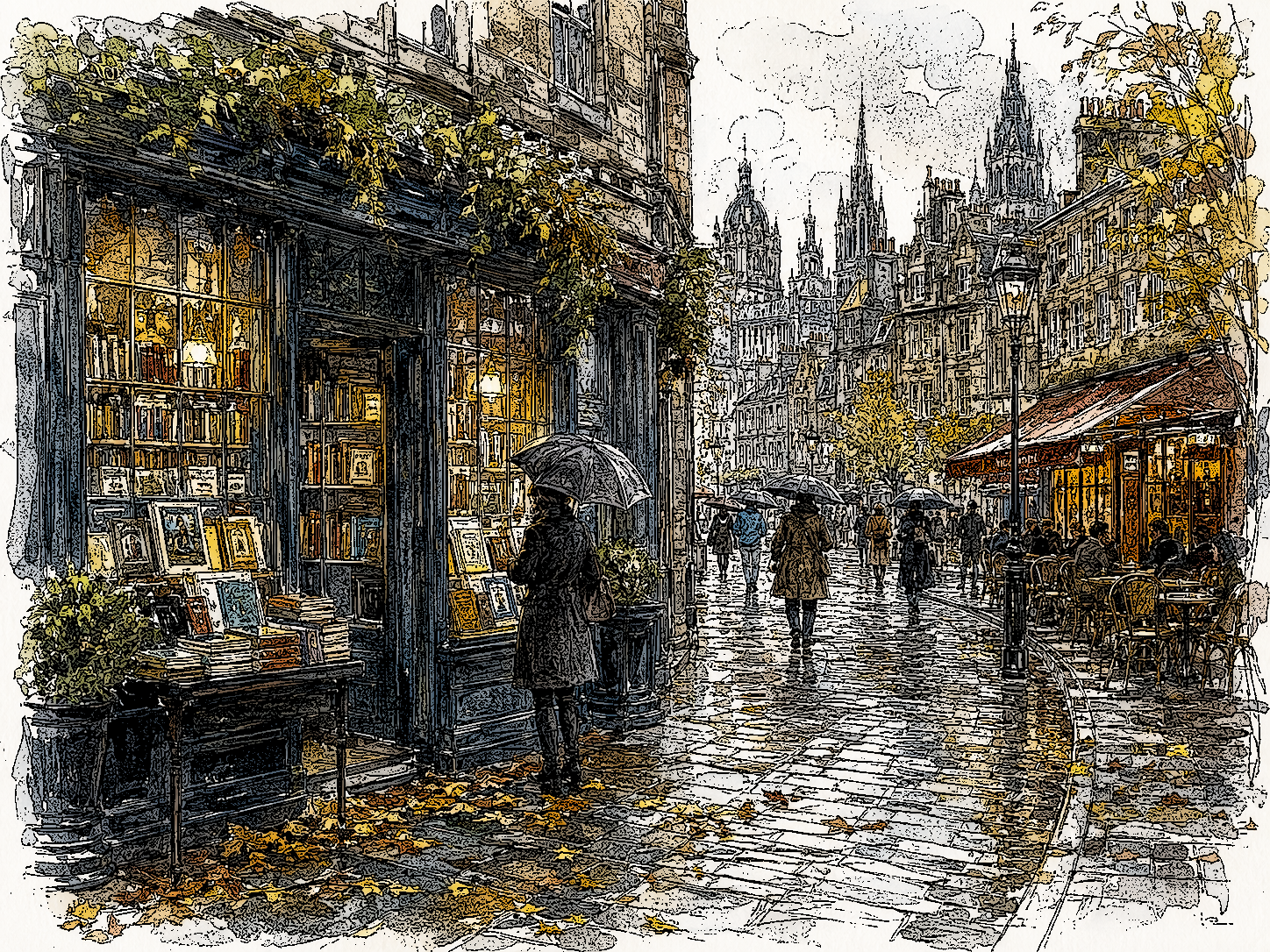
European Christmas markets have never struggled for appeal.
There are the lights, the wooden stalls, the old town squares, the smell of mulled wine and roasted nuts, the church towers in the background, the handmade decorations, the carols, the cold air, the food people swear they are only “just tasting,” and the general feeling that Europe has decided to put on every lamp it owns.
For travellers, festive Europe is easy to dream about.
For travel agents and tour operators, it needs more careful thought.
Christmas market travel can be wonderfully atmospheric, but it can also become repetitive or logistically awkward if the trip is built around one crowded square and not much else. The strongest festive itineraries do not simply ask, “Which market should clients visit?” They ask how the experience should move.
That is where rail becomes useful.
A Christmas markets by rail itinerary allows travellers to connect several festive cities and regions in one journey, often using central stations, shorter transfers, and routes that make geographic sense. National Geographic has highlighted European Christmas market routes by rail, including journeys through cities such as Edinburgh, Amsterdam, Cologne, Strasbourg, Vienna, and Graz, showing how naturally festive travel and train travel can fit together.
For Europe Incoming, this is where the opportunity sits: not just selling Christmas markets, but designing festive Europe in a way that feels smoother, richer, and better planned.

Why Christmas Markets Work So Well By Train
Many of Europe’s best Christmas market cities are already rail-friendly.
Their stations are often close to historic centers. Their old towns are walkable. Their festive markets are clustered around squares, cathedrals, town halls, and shopping streets. In the right regions, the distance between cities is short enough to make rail feel natural rather than forced.
That matters because festive travel is not only about the market itself. It is about the whole rhythm of the trip.
A good rail-based festive itinerary can give travellers:
- More than one market atmosphere in a single trip
- Less time spent on airport transfers
- Easier city-center arrivals
- Scenic winter travel between stops
- A stronger sense of journey
- Better opportunities for regional combinations
- More variety in food, architecture, traditions, and local culture
Rail also changes the emotional texture of the trip. A flight can feel like a break in the story. A train can feel like part of it.
The journey from one decorated city to another, past winter fields, river valleys, old stations, and evening lights, can become part of the festive experience rather than dead time between destinations.
The Problem With Single-City Christmas Market Trips
A single Christmas market city can work very well, especially for short breaks. But for groups, FIT clients, or longer festive programmes, the one-city approach can feel thin unless it is built with care.
The danger is that the market becomes the entire itinerary.
Travellers arrive, walk through the stalls, take photos, eat something sweet, buy a decoration, drink something warm, and then wonder what else has been planned.
That is fine for a quick city break. It is less compelling for a multi-day programme.
The better approach is to treat Christmas markets as seasonal anchors within a wider winter itinerary. That could include historic neighborhoods, museums, concerts, food experiences, river walks, regional day trips, palaces, cathedrals, craft traditions, winter gardens, scenic rail, and local festive customs.
Rail makes this easier because it allows operators to connect complementary places without forcing every day to depend on coaches or airports.
A festive itinerary should feel like a journey through winter Europe, not a repeated loop of stalls, sausages, and souvenir mugs.
The Best Christmas Market Routes Are About Contrast
The strongest rail itineraries do not simply connect the biggest names. They connect places that feel different from one another.
A large city market can be paired with a smaller old-town market. A grand imperial city can be paired with a mountain or river destination. A famous festive capital can be balanced with a quieter regional stop. This creates rhythm and contrast, which is what prevents a Christmas market itinerary from becoming a glittery blur.
A good festive rail route might combine:
- A major city with a smaller regional town
- A historic market with a food-led destination
- A German-speaking Christmas tradition with a French, Czech, Swiss, or Belgian variation
- A city stay with a scenic rail or countryside extension
- A famous market with a less crowded local experience
This is where operators can add real value.
Anyone can search for Europe’s most famous Christmas markets. The skill is knowing which ones combine well, where the route flows, how many nights are needed, and whether the experience will still feel enjoyable in real life.
Strong Christmas Market Routes By Rail
The right route depends on the client, budget, travel pace, origin market, group size, and whether the trip is more cultural, festive, luxury, educational, or leisure-led. But several regions work especially well for rail-based Christmas market planning.
Strasbourg, Colmar, Basel, And Zurich
Alsace is one of Europe’s strongest festive regions, and Strasbourg is one of the most recognisable Christmas market names. Its official Christmas market runs from 26 November to 24 December 2026, with stalls open daily and adjusted hours on opening day and Christmas Eve.
A Strasbourg-focused itinerary can be extended by rail into Colmar and the wider Alsace region, then onward to Basel or Zurich, depending on the programme. This gives the trip a strong mix of French, Germanic, and Swiss influences.
This route works well for travellers who want:
- Old-town atmosphere
- Traditional festive markets
- Regional food and wine
- Beautiful smaller towns
- Easy cross-border combinations
- A compact but richly textured itinerary
It is also useful because the experience does not need to rely on Strasbourg alone. The wider region gives the trip more depth.
Cologne, Aachen, Düsseldorf, And The Rhine Region
Western Germany is very useful for Christmas market itineraries because cities are closely connected by rail, and each has a slightly different feel.
Cologne works especially well as a base because of its cathedral setting, multiple market areas, and strong rail links. The Christmas market at Cologne Cathedral lists provisional 2026 dates from 16 November to 23 December 2026, while other Cologne markets can have different operating periods.
This route works well for travellers who want:
- Classic German Christmas market atmosphere
- Cathedral cities
- Short train journeys
- River-region combinations
- Flexibility for groups and FIT travellers
- A festive route with easy extensions into Belgium or the Netherlands
The key is not to overpack it. Because the cities are close together, there is a temptation to turn every day into another stop. A better programme gives each place enough time to breathe.
Nuremberg, Munich, Salzburg, And Vienna
This is one of the strongest festive rail corridors in Europe because it combines German and Austrian Christmas traditions with major cultural cities and strong rail connections.
Nuremberg’s Christkindlesmarkt is scheduled for 27 November to 24 December 2026, according to the city’s tourism office. Vienna’s Christmas Market at Rathausplatz is listed by Vienna’s official tourism site as running from 13 November to 26 December 2026.
A well-designed route could include Nuremberg, Munich, Salzburg, and Vienna, although not every itinerary needs all four. For some clients, three stops with stronger pacing will work better than four stops with too many luggage moves.
This route works well for travellers who want:
- Historic Christmas market traditions
- Music, architecture, and imperial culture
- Food and craft experiences
- Strong rail links
- Beautiful old towns
- Optional Alpine or lake-region extensions
It is especially good for travellers who want festive atmosphere without losing the broader cultural value of the trip.
Dresden, Leipzig, Prague, And Central Europe
Dresden has one of Europe’s most historic Christmas market traditions. The city’s Striezelmarkt is scheduled from 25 November to 24 December 2026, and Saxony Tourism describes it as Germany’s oldest Christmas market.
A Dresden itinerary can combine well with Leipzig and Prague, creating a route with history, music, architecture, food, and Central European winter atmosphere. This is a strong option for travellers who may have already visited the more obvious festive routes and want something with cultural weight.
This route works well for travellers who want:
- Older Christmas market traditions
- Music and cultural heritage
- Central European architecture
- Museums, churches, and historic squares
- A route that feels less predictable than the usual festive circuit
It can also work well for educational, special-interest, and culture-led groups.
Brussels, Bruges, Ghent, Antwerp, And Cologne
Belgium is often underrated for festive travel, especially when combined intelligently by rail.
Brussels, Bruges, Ghent, and Antwerp can create a compact, beautiful winter route with medieval streets, food, beer, chocolate, art, and design. Cologne can be added for a stronger German Christmas market contrast, depending on the travel length and client interest.
This route works well for travellers who want:
- Short rail hops
- Medieval city atmosphere
- Food and drink experiences
- Smaller-scale festive stops
- A mix of Belgian and German traditions
- Good options for shorter programmes
It is particularly useful for clients who want a festive trip that feels atmospheric without becoming too heavy or too logistically ambitious.

Why Rail Makes Festive Group Travel Easier, But Not Effortless
Rail can make Christmas market itineraries smoother, but it does not remove the need for planning.
This is especially true for groups.
Train stations may be central, but groups still need to move through platforms, manage luggage, board together, and transfer to hotels. Some routes require seat reservations. Some trains have limited luggage space. Winter weather can affect services. Markets can be crowded on weekends. Hotels near stations or historic centers may book early. Coaches may still be needed for certain transfers, day trips, or luggage support.
Rail helps when the itinerary is designed around it. It becomes awkward when it is added as decoration after the route has already been built.
Operators should consider:
- How far the hotel is from the station
- Whether luggage support is needed
- Whether the group can board comfortably
- How much time is required between hotel check-out and train departure
- Whether train times support a sensible day programme
- Whether weekends or opening events create crowd pressure
- Whether the market is better visited by day, evening, or both
- Whether there is enough non-market content in each city
A Christmas market rail trip should feel relaxed and atmospheric. It should not feel like a festive obstacle course with cinnamon on top.
When Should Christmas Market Tours Be Booked?
Christmas market travel should be planned early, especially for groups.
The festive season is short. The most desirable weekends are limited. Central hotels sell quickly. Rail inventory and group seating can become more difficult. Restaurants, guides, coaches, and special experiences are all working within a compressed seasonal window.
For groups and operators, the best time to start planning is often many months in advance, especially if the trip depends on:
- Weekend dates
- Central accommodation
- Multiple cities
- Rail reservations
- Special meals or concerts
- Larger room blocks
- Accessible arrangements
- Private guides
- Coach support for station transfers or excursions
Late bookings can still work for some FIT clients or smaller groups, but the itinerary may need more flexibility. With Christmas markets, the calendar is not generous. Once the season is gone, it is gone.
The Weekday Advantage
One practical planning point is often overlooked: weekdays can be much better than weekends.
Christmas markets are atmospheric at almost any time, but weekends can become extremely crowded, especially in famous cities and during the final weeks before Christmas. For groups, heavy weekend crowds can make movement slower, meeting points harder, and the overall experience less comfortable.
A smart festive itinerary might use weekdays for the busiest market cities and reserve weekends for smaller towns, cultural visits, scenic rail, or less crowd-sensitive experiences.
This can help protect the mood of the trip.
Because festive travel should feel warm and lively, not like being slowly carried by a human tide toward a wooden ornament stall.
How To Build More Value Into A Christmas Market Itinerary
The best Christmas market trips include the markets, but do not depend entirely on them.
Operators can build stronger programmes by adding experiences that give each destination more character.
That might include:
- A classical concert in Vienna or Salzburg
- A food tour in Cologne or Strasbourg
- A craft workshop or ornament-making experience
- A cathedral or old-town walking tour
- A winter river cruise where seasonally appropriate
- A museum or palace visit
- A regional day trip to smaller markets
- A festive baking or tasting experience
- A scenic rail journey between cities
- A Christmas traditions tour with a local guide
These experiences turn the trip from “we visited markets” into “we experienced festive Europe.”
That distinction matters.
The DMC View: Festive Travel Needs Flow
Christmas market travel has an easy emotional appeal, which can make it look simple from the outside.
But the best festive itineraries are carefully built. The rail routes need to work. The hotels need to be practical. The market visits need to be timed well. The group needs enough space to move. The itinerary needs non-market content. The programme needs buffers. The experience needs contrast.
This is where DMC support becomes especially valuable.
At Europe Incoming, we help travel partners design festive European itineraries that are more than a collection of market stops. That includes rail-friendly routing, supplier coordination, hotel planning, local guides, regional combinations, group logistics, and practical support across Europe and the UK.
Because Christmas markets are not difficult to find.
The real skill is building the journey around them.

FAQs About Christmas Markets By Rail In Europe
What Are The Best Christmas Markets In Europe By Train?
Some of the strongest Christmas market destinations by train include Strasbourg, Colmar, Cologne, Aachen, Nuremberg, Munich, Salzburg, Vienna, Dresden, Leipzig, Prague, Brussels, Bruges, Ghent, and Antwerp. The best choice depends on the route, group size, travel dates, budget, and the type of festive experience the traveller wants.
Can You Visit European Christmas Markets By Rail?
Yes. Many European Christmas market cities are well connected by train, and rail can be one of the easiest ways to combine several festive destinations in one itinerary. It works especially well in regions such as Alsace, western Germany, Bavaria and Austria, Saxony and Central Europe, and Belgium.
Which Christmas Markets Are Easy To Combine?
Easy combinations include Strasbourg and Colmar; Cologne, Aachen, and Düsseldorf; Nuremberg, Munich, Salzburg, and Vienna; Dresden, Leipzig, and Prague; and Brussels, Bruges, Ghent, Antwerp, and Cologne. The best combination depends on travel time, train schedules, hotel availability, and how many nights are available.
When Should You Book Christmas Market Tours In Europe?
Christmas market tours should be booked early, especially for groups. The season is short, central hotels and weekend dates sell quickly, and rail, guides, restaurants, and special experiences can become harder to secure as the festive period approaches.
Are Christmas Market Rail Trips Good For Groups?
Yes, but they need careful planning. Groups need practical hotels, sensible station transfers, luggage arrangements, seat reservations where required, clear meeting points, and enough time in each city. Rail can work very well when the route is designed around group movement from the start.
Are Weekdays Better For Visiting Christmas Markets?
Often, yes. Famous Christmas markets can be very crowded on weekends, especially closer to Christmas. Weekday visits can make the experience more comfortable, particularly for groups, older travellers, and clients who want more time to browse, eat, and enjoy the atmosphere.
Why Use A DMC For Christmas Market Travel?
A DMC can help design a route that works on the ground, not just on a map. This includes choosing the right city combinations, checking market dates, coordinating hotels and guides, planning rail and transfers, and building a festive itinerary with enough variety, comfort, and flow.