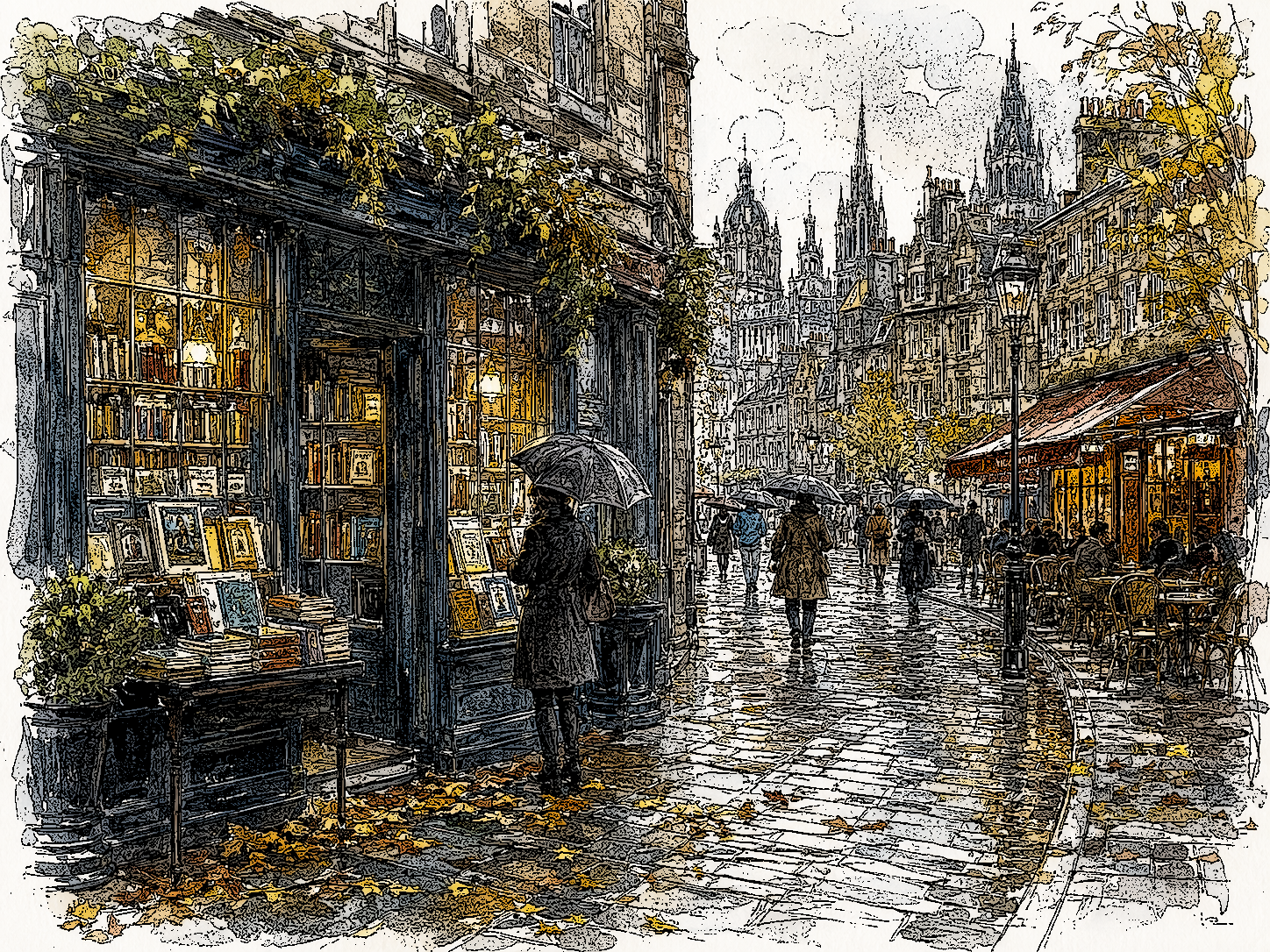
Autumn in Europe is easy to romanticise.
There are golden trees, softer light, cafés with blankets over chairs, steam rising from market stalls, vineyards turning copper, city parks under a thin drift of leaves, and hotel lobbies that suddenly remember they own lamps. It is atmospheric, yes. But if operators sell autumn only as “cosy,” they risk flattening one of Europe’s most useful travel seasons into a scented candle.
Autumn deserves better.
For travel agents and tour operators, the season is not just charming. It is commercially useful, operationally sensible, and increasingly aligned with how travellers are making decisions. As heat, overtourism, affordability, and comfort reshape European travel planning, autumn gives the travel trade a stronger way to position Europe beyond the peak-summer rush.
The European Travel Commission reported that 81% of Europeans planned to travel between June and November 2026, with safety, affordability, and climate considerations shaping destination choices. Euronews has also reported that the rise of coolcations may contribute to seasonal redistribution, with trips to hotter countries moving into spring or autumn to avoid overtourism and exhausting temperatures.
That makes autumn more than a mood. It makes it a planning opportunity.
Autumn Should Be Sold As A First Choice, Not A Fallback
The problem with the term “shoulder season” is that it can make autumn sound secondary. It suggests a quieter, cheaper strip of calendar between the main summer event and the festive winter season.
That is not how operators should sell it.
Autumn can be the best time for certain travellers, routes, and experiences. A food and wine itinerary in Piedmont, Bordeaux, Rioja, Tuscany, the Douro, or Istria may be stronger in October than in August. A culture-led city break in Vienna, Prague, Paris, London, Madrid, Berlin, or Edinburgh may feel richer once the cultural calendar picks up again. A regional itinerary through France, Italy, Spain, Portugal, Germany, Austria, Switzerland, Slovenia, or Croatia can often move with less pressure after peak summer.
So the message should not be, “Travel in autumn because summer is too busy.”
The stronger message is, “Travel in autumn because this is when the destination gives you a better version of the experience you want.”
That shift matters. It changes autumn from a compromise into a recommendation.

The Trouble With Cosy Travel Copy
Autumn travel copy can become lazy very quickly.
It often leans on the same small cluster of words: cosy, crisp, charming, magical, hidden gem, warm glow, golden escape. None of those words are wrong, exactly, but they can become decorative rather than useful. They tell the reader how to feel before giving them a reason to care.
Good autumn travel positioning needs more substance.
Instead of selling the season through vague atmosphere, operators should explain what autumn actually improves. Does it make walking tours more comfortable? Does it open up harvest experiences? Does it reduce crowd pressure in major cities? Does it allow better hotel availability? Does it make rail travel more appealing? Does it give travellers access to food, wine, festivals, theatre, music, markets, or countryside routes that are specific to the season?
That is the difference between pretty copy and useful positioning.
“Cosy” can be part of the tone. It should not be the entire strategy.
What Actually Makes Autumn Valuable
Autumn works because it brings together several practical advantages at once.
The first is comfort. In many European destinations, September and October offer more manageable conditions for sightseeing than high summer. This matters especially for groups, older travellers, students, and multi-city itineraries where long walking days, coach movements, and timed visits need to work smoothly.
The second is pacing. Autumn often gives itineraries more room to breathe. Not everywhere is quiet, and major events can still create demand spikes, but many routes become easier to manage once the highest summer pressure begins to soften.
The third is seasonality. Autumn has food, wine, harvest, festivals, markets, cultural calendars, theatre, exhibitions, music, and local rhythms that do not need to be invented by marketers. They already exist. The task is to build around them properly.
The fourth is relevance. Travellers are paying more attention to value, comfort, and timing. Mastercard’s 2026 travel trends report identifies Europe as a major anchor for cultural, culinary, and journey-based travel, with rail tourism gaining momentum across the region. Autumn connects naturally with all three: culture, food, and the journey itself.
This is the practical heart of autumn travel. It is not just beautiful. It is useful.
Sell The Season Through Experience, Not Decoration
A strong autumn itinerary should be built around what the season changes.
In a wine region, autumn is not simply a prettier time to visit. It is harvest season, with cellar activity, regional food, local festivals, and a stronger relationship between landscape and table. In a city, autumn is not only softer light and fewer sandals. It is the return of museums, concerts, exhibitions, theatre, restaurants, and daily life after the summer swell. In mountain regions, autumn is not just the pre-ski gap. It is a season for rail, lakes, wellness, villages, walking, and slower scenic travel.
This gives operators a better language for selling Europe.
Instead of relying on adjectives, lead with the experience:
- Food and wine routes that follow harvest season
- City breaks built around culture, museums, music, and theatre
- Rail itineraries that turn the journey into part of the trip
- Countryside stays with markets, villages, and regional cooking
- Coastal destinations repositioned for warmth without peak-summer pressure
- Student and educational trips with more comfortable city movement
- Wellness itineraries built around thermal baths, spas, saunas, and slower travel
These are not just autumn decorations. They are reasons to travel.

Autumn Is Especially Strong For Food And Wine
Food is one of the easiest ways to make autumn feel specific rather than sentimental.
This is the season of grape harvests, truffles, mushrooms, chestnuts, apples, pears, figs, olive oil, game, cheese, and richer regional menus. A traveller may not know exactly why October in Piedmont, Tuscany, Rioja, Bordeaux, the Douro, Istria, or Alsace is so compelling, but once the itinerary is framed around what is happening on the ground, the value becomes obvious.
Food and wine also help operators move travellers into regions, not just capitals.
That matters for product development. A food-led autumn trip can take clients beyond Paris into Burgundy, Champagne, Alsace, Bordeaux, or the Loire. It can move Italy beyond Rome, Florence, and Venice into Piedmont, Tuscany, Umbria, Emilia-Romagna, Veneto, or the lakes. It can open Spain through Rioja, the Basque Country, Galicia, Andalusia, Catalonia beyond Barcelona, or Castile. It can turn Portugal into Porto, the Douro, Alentejo, Madeira, or northern Portugal rather than only Lisbon and the Algarve.
The commercial value is not only in selling food. It is in using food to create better routes.
Culture Gives Autumn Its City Energy
Autumn is also when European cities start to feel more like themselves again.
Summer can be exciting, but in some cities it is also distorted by visitor volume, heat, school holidays, and seasonal rhythms that pull locals away. Autumn brings a different mood. Cultural calendars return. Restaurants settle into a steadier pace. Concert halls, theatres, galleries, museums, universities, and creative districts become more central to the travel experience.
This is valuable for operators because it gives city travel more depth.
A Vienna itinerary can focus on music, cafés, museums, and imperial history. A London itinerary can connect theatre, exhibitions, food, literature, and neighbourhoods. A Paris itinerary can move beyond landmarks into galleries, food, fashion, design, and local quarters. Prague, Budapest, Berlin, Madrid, Barcelona, Edinburgh, Dublin, Kraków, Ljubljana, and Amsterdam all have autumn stories that are more interesting than “come when it is less busy.”
For student groups, this is especially useful. Autumn can support educational travel because cities are active, institutions are open, and walking-heavy days are often more manageable than in peak summer.
The season helps the city work harder for the itinerary.
Avoid Selling Autumn As Empty Europe
One common mistake is to overpromise peace and quiet.
Autumn is not empty. Popular cities still attract visitors. Major festivals, conferences, sporting events, fashion weeks, film festivals, cruise schedules, school breaks, and local holidays can all affect demand. Some autumn destinations are extremely busy at specific moments, especially around Oktoberfest, wine harvest events, truffle fairs, film festivals, and October half-term periods.
So operators should avoid implying that autumn is crowd-free.
A better position is that autumn can be more manageable, more comfortable, and better suited to certain types of travel than peak summer. That is honest, and it is more useful.
The real benefit is not the absence of people. The benefit is better flow.
For groups, better flow can mean smoother walking tours, less heat fatigue, more realistic coach days, more flexible dining, easier attraction planning, and more relaxed first-day programming. For FIT travellers, it can mean more room to explore, linger, and choose experiences that feel less rushed.
Give Clients A Reason To Choose The Month
Autumn should not be sold as one single block.
September, October, and November each need different positioning.
September is still warm in many parts of Europe and works well for clients who want a softer version of late summer. It can suit Mediterranean routes, coastal extensions, wine regions, city breaks, and travellers who want warmth without the highest August pressure.
October is often the strongest month for food, wine, culture, countryside, rail, festivals, and comfortable city travel. It is a natural fit for richer regional itineraries and clients who want Europe to feel atmospheric without drifting into winter.
November is more specific, but it should not be ignored. It works well for culture, museums, food, value-conscious travel, theatre, history, educational groups, and quieter city breaks. It can also act as a bridge into festive travel, depending on Christmas market dates and destination calendars.
This month-by-month clarity helps agents sell with confidence. It turns “autumn is nice” into “this is the right month for this kind of trip.”

The Language Operators Should Use Instead
The best autumn travel language is warm, but not sugary. It should feel intelligent, specific, and grounded in the experience.
Instead of saying:
“Enjoy cosy autumn charm in Europe’s hidden gems.”
Say:
“Autumn gives travellers a more comfortable way to experience Europe’s cities, wine regions, cultural calendars, and countryside routes, without the pressure of peak summer.”
Instead of saying:
“Fall in love with magical autumn escapes.”
Say:
“September and October can give operators better conditions for walking tours, food-led regional travel, rail itineraries, and group movement across Europe.”
Instead of saying:
“Discover Europe’s best-kept secrets.”
Say:
“Autumn is a useful time to build itineraries around secondary cities, regional stays, harvest experiences, and cultural events that give travellers a more specific reason to go.”
The second version is less fluffy, but more persuasive. It gives the reader something to work with.
How Tour Operators Can Promote Autumn Europe
Operators can promote autumn successfully by connecting the season to client needs, not just destination aesthetics.
For travellers worried about summer heat, autumn can be positioned around comfort and better pacing. For clients concerned about value, it can be positioned around the overall quality of experience, not simply price. For repeat travellers, autumn can be positioned as a way to experience familiar destinations differently. For groups, it can be positioned around smoother movement and less operational pressure. For FIT clients, it can be positioned around food, culture, atmosphere, and access.
The best autumn campaigns should focus on:
- Why the destination works better in autumn
- What seasonal experiences are only available then
- How the itinerary feels different from a summer route
- Which traveller type the season suits
- What practical benefits autumn creates
- How local food, festivals, rail, culture, and countryside shape the trip
This creates a stronger commercial message because it connects autumn to outcomes.
Travellers do not only want leaves. They want a better trip.
Autumn Can Help Spread Demand More Sensibly
Autumn travel also fits into a broader industry conversation about spreading demand beyond peak periods and beyond overburdened places.
The European Parliament has noted that specialised tourism, including gastronomy, wine, cultural, religious, heritage, wellness, sports, and other forms of travel, can create opportunities for rural and peripheral regions while extending travel beyond peak seasons and dispersing visitor flows.
That is highly relevant for autumn.
Food routes, wine regions, heritage towns, cultural events, rail journeys, and countryside stays can all help operators design itineraries that are more distributed and less dependent on the most crowded summer icons. This does not mean removing major cities. It means building routes that use them more intelligently and connect them to the regions around them.
For EI, this is a particularly strong message because it links seasonality with practical destination management. Autumn is not only a nicer time to travel. It can be a smarter way to organise demand.
The DMC View: Autumn Needs Better Storytelling And Better Planning
Autumn is one of Europe’s strongest travel seasons, but it needs to be sold properly.
If the story is too soft, it becomes generic. If the story is too operational, it loses its feeling. The best autumn positioning does both: it gives travellers a sense of atmosphere while giving agents and operators real reasons to recommend the season.
At Europe Incoming, we help travel partners build autumn itineraries that reflect the destination, the month, the traveller, and the realities on the ground. That includes regional routing, food and wine experiences, cultural calendars, rail planning, supplier coordination, group logistics, hotel selection, and practical support across Europe and the UK.
Because autumn in Europe is not just a pretty pause between summer and Christmas.
It is a season with its own rhythm, its own reasons, and its own commercial value.
The trick is not to make it sound cosy.
The trick is to make it sound worth choosing.
FAQs About Selling Autumn Travel In Europe
How Do You Sell Autumn Travel In Europe?
Sell autumn travel in Europe by focusing on the practical and experiential advantages of the season: more comfortable sightseeing, food and wine experiences, cultural calendars, better pacing, regional routes, rail travel, and fewer peak-summer pressure points in many destinations. Avoid relying only on vague language about scenery or cosiness.
Why Is Autumn A Good Travel Season In Europe?
Autumn is a good travel season in Europe because many destinations offer comfortable weather, strong cultural programming, seasonal food and wine, harvest events, more manageable crowd levels, and better conditions for walking, touring, and regional travel.
What Makes Europe Special In Autumn?
Europe is special in autumn because the season brings together cultural life, food traditions, wine harvests, truffle fairs, markets, theatre, music, changing landscapes, and a more local rhythm after the intensity of summer. It is especially strong for travellers who want depth and atmosphere.
How Can Tour Operators Promote Shoulder Season?
Tour operators can promote shoulder season by showing how spring and autumn improve the travel experience. This can include better pacing, more comfortable temperatures, regional food and wine, cultural events, rail-friendly routes, and smarter alternatives to peak-summer itineraries.
Is Autumn Better Than Summer For Europe Travel?
Autumn can be better than summer for certain travellers and destinations, especially where summer heat, crowds, and pricing create pressure. Summer still works well for many trips, but autumn can offer a stronger experience for culture, food, wine, rail, city breaks, and group travel.
What Are The Best Autumn Travel Ideas For Europe?
Strong autumn travel ideas include wine harvest routes, truffle season itineraries, cultural city breaks, autumn rail journeys, food festivals, countryside stays, wellness trips, student travel, and city-and-region combinations across France, Italy, Spain, Portugal, Central Europe, the UK, Ireland, and the Alps.
Why Should A DMC Help With Autumn Europe Itineraries?
A DMC can help operators choose the right destination for the right autumn month, check seasonal openings, plan realistic routes, coordinate suppliers, manage group logistics, and build itineraries around experiences that genuinely work during the season.