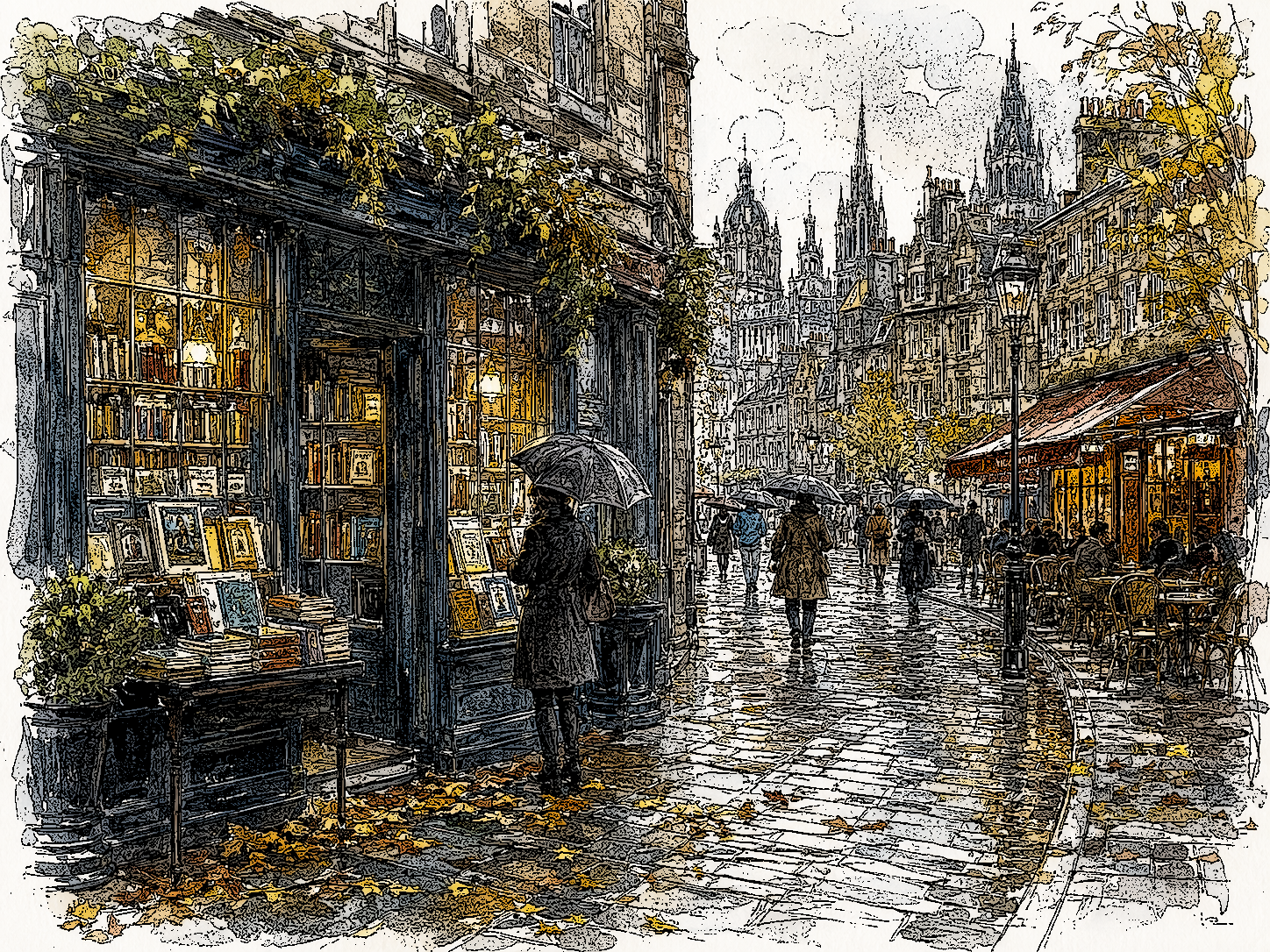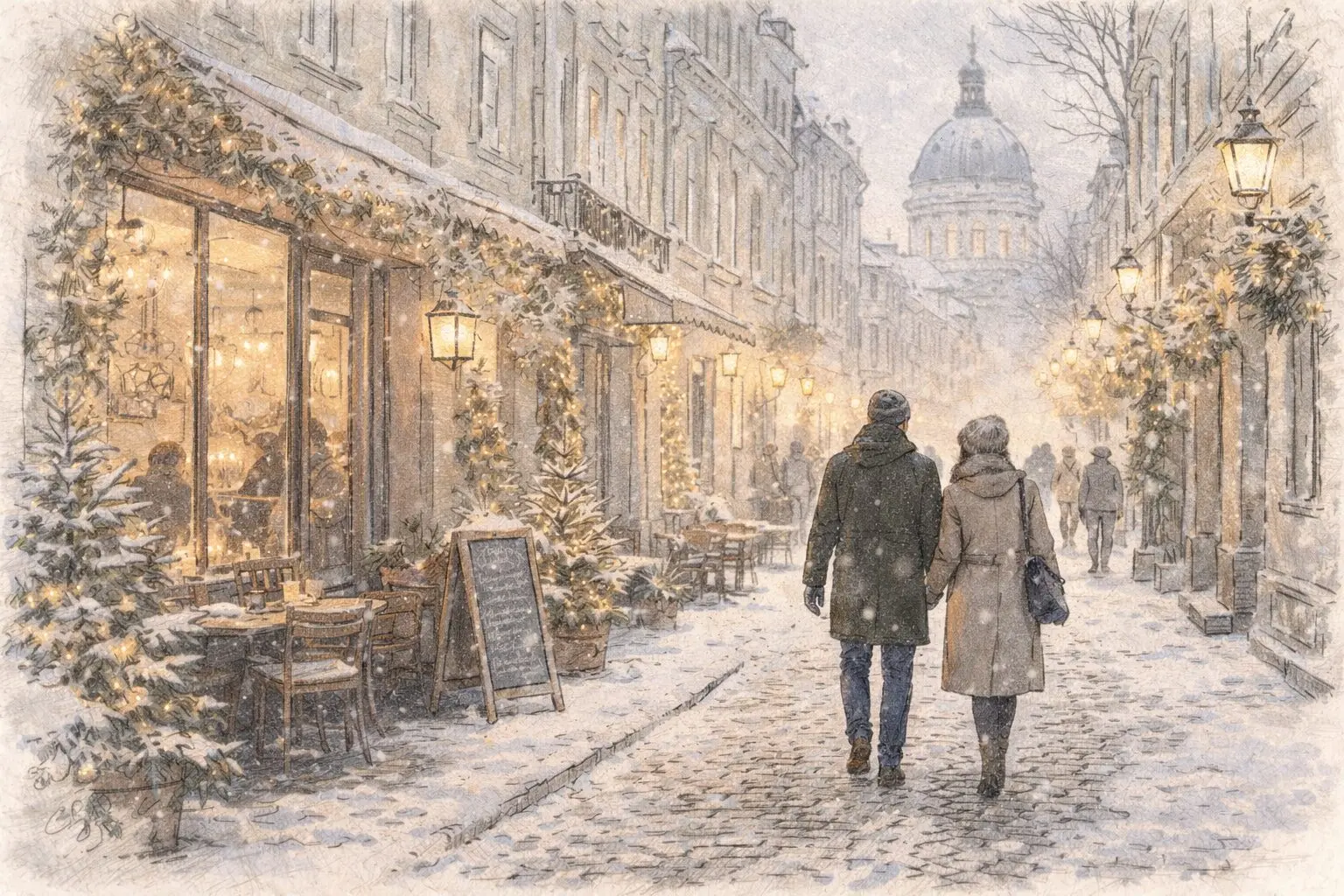
Winter has a way of quietening places. Streets soften. Cafés linger longer. Cities feel less like stages and more like lived-in spaces. With fewer daylight hours, travel naturally slows — and in that slowing, something shifts.
Where summer itineraries often push travellers to collect moments, winter invites them to inhabit them. Fewer sights, fewer stops, less urgency. More presence.
This is where slow travel comes into its own.

When Winter Changes the Rhythm
Shorter days subtly reshape the way people move through a place. Mornings begin more gently, without the urgency to be out the door early. Evenings arrive sooner, drawing activity inward rather than stretching it thin across long hours. There is less pressure to chase daylight and more permission to settle, to linger, to let the day unfold at a slower pace.
As movement slows, attention sharpens. Travellers notice contrasts that pass unseen in busier seasons. The warmth of an interior after cold air. The quiet rhythm of footsteps across stone. Steam rising from coffee cups in a half-lit café. Streets feel less performative, less crowded with expectation, and more honest in their daily life.
Without summer’s constant momentum, cities reveal a different character. They feel inhabited rather than displayed. Conversations last longer. Spaces invite pause. The experience becomes less about coverage and more about presence.
Winter doesn’t strip travel back. It distils it.
Why Fewer Stops Often Mean Deeper Journeys
In winter, movement carries more weight. Transfers take longer. Weather adds friction. Packing and unpacking becomes more tiring when daylight is short and temperatures are low. Each transition asks more of travellers, both physically and mentally, than it might in warmer months.
Thoughtful winter itineraries respond not by pushing harder, but by easing the pace. Rather than treating distance as something to conquer, they treat stillness as something to value.
Fewer destinations and longer stays allow travellers to settle into a place rather than skim across its surface. Staying three nights instead of two changes the rhythm entirely. The first day is for arrival and orientation. The second allows for exploration without urgency. By the third, familiarity begins to form. Guests recognise streets. Café staff become familiar faces. The city no longer feels like a backdrop to an itinerary, but a setting in which time is genuinely spent.
This kind of pacing creates space for connection. With place, with people, and with the small details that give travel its meaning. Meals feel less transactional. Walks become purposeful rather than functional. Experiences are absorbed rather than consumed.
Slow travel in winter is not about minimalism or restraint for its own sake. It is about attention. Choosing where to stay longer is, in itself, a decision to see more.

Designing with Light, Not Against It
In winter, light becomes more than a backdrop. It becomes a design element in its own right.
Late starts respect natural rhythms. Mornings unfold without urgency, often beginning indoors where warmth, conversation, and culture take precedence. Breakfast stretches a little longer. Museums, galleries, and historic interiors provide an easy transition into the day. There is no sense of rushing to make the most of early light, because the itinerary has already accounted for its limits.
Sightseeing finds its natural place in the brightest hours, when streets feel most open and movement feels effortless. Rather than pushing from one highlight to the next, winter itineraries allow time for pauses — a stop to warm up, a moment to observe, an unplanned turn down a quieter street. The experience feels guided by daylight, not constrained by it.
As afternoon fades, the focus shifts inward. Evenings take on greater importance, shaped by warmth and atmosphere rather than distance covered. Candlelit dinners, concerts, small performances, and intimate gatherings become anchors of the day. These are not secondary experiences but central ones, creating a sense of closure and shared presence.
When itineraries are designed to follow the light, travel feels balanced rather than strained. Days move with the season instead of against it, and the rhythm of winter becomes part of the experience rather than an obstacle to overcome.
Experiences That Belong to the Season
The most successful winter itineraries lean into what the season does well, rather than trying to replicate summer travel at lower temperatures.
Indoor culture comes to the foreground. Museums, galleries, artisan studios, and historic interiors reveal a different depth when explored without crowds pressing at the edges. There is time to pause, to listen, to absorb context rather than rush between highlights. Winter allows these spaces to be experienced as they were intended — places of learning, craftsmanship, and quiet contemplation.
Food becomes central, not incidental. Cold days naturally draw people toward warmth and ritual, and winter dining carries a different weight. Markets are lingered over rather than passed through. Tastings become conversations. Meals stretch, unhurried, shaped by local traditions that exist precisely because of the season. In many places, winter food tells the most honest story of a region.
Wellness experiences also resonate more deeply in winter. Thermal baths, saunas, hammams, and water rituals feel restorative rather than indulgent, offering contrast between cold air and warmth that heightens the senses. These moments provide not just rest, but rhythm, giving structure to days that move more slowly by design.
Walking remains an important part of winter travel, but its purpose shifts. Routes are chosen for atmosphere rather than distance. A quiet historic quarter, a riverside path, a market square at dusk. Movement becomes a way to feel the place, not to catalogue it.
Winter itineraries succeed when experiences align with the season. When they do, the result feels natural, immersive, and quietly satisfying; travel that belongs where and when it happens.
Places That Reveal Themselves Slowly
Not every destination lends itself naturally to winter slow travel. Some places rely on outdoor spectacle or long days to create momentum. Others, however, reveal their true character when movement slows and interior life takes precedence.
Cities with strong café cultures, walkable historic centres, and deeply layered traditions tend to come into their own during winter months. Life does not retreat indoors so much as it reshapes itself. Conversations continue over small tables. Shops remain open, even as streets quieten. Cultural life shifts inward, becoming more intimate and more accessible.
In these places, daily rhythms persist regardless of weather. Markets still operate. Neighbourhoods remain active. Travellers feel invited into local routines rather than held at arm’s length. There is less sense of performance, more of participation.
Winter strips away the ornamental layers of tourism and leaves something more honest behind. A city is no longer presenting itself. It is simply being itself.
These are places where winter is not something to be endured or escaped, but a season that is fully lived and where travel, in turn, becomes more personal and more meaningful.
Group Travel, Softened by the Season
Winter subtly reshapes group dynamics. Shared warmth, quieter streets, and unhurried evenings create a natural sense of closeness. Without the pressure of long, full days, groups tend to move together more intuitively, guided less by schedules and more by collective rhythm.
Conversations linger. Meals stretch. Moments of stillness are shared rather than hurried through. The absence of summer’s pace allows individuals within the group to settle, to feel present rather than perpetually in motion. Even those who might normally feel overwhelmed by group travel often find winter’s tempo more forgiving.
Successful winter group itineraries balance structure with softness. Clear planning provides reassurance, while built-in flexibility allows the group to respond to energy levels, weather, and mood. There is time to warm up between activities, to linger when something resonates, and to retreat indoors without the sense that anything essential is being missed.
When pacing is respected, winter groups often feel more cohesive, not less. The season encourages togetherness without forcing it, creating shared experiences that feel natural rather than orchestrated.
Leaving Space on Purpose
One of the hardest habits to break in itinerary design is the impulse to fill every hour. In winter, that instinct can work against the experience.
Shorter days and shifting conditions call for restraint. Well-considered gaps allow weather, mood, and curiosity to shape the day organically. They create breathing room for spontaneity, whether that takes the form of a café discovered by chance, a local recommendation followed on a whim, or a quiet street that invites a detour.
Space also offers recovery. Time to sit, to reflect, to warm up. These pauses are not empty moments, but essential ones that give texture to the journey and prevent fatigue from setting in.
In winter travel, what is left unscheduled often becomes what is remembered most clearly. The unplanned moments, the small choices, the sense of having time rather than chasing it. These are what give slow travel its lasting meaning.
Winter as an Invitation
Slow winter travel is not a compromise, nor a quieter substitute for something better. It is a different way of seeing, shaped by restraint, attention, and presence.
Shorter days invite focus rather than limitation. Cold air sharpens the senses, heightening contrasts and bringing small details into relief. Stillness creates space for meaning to surface, allowing places to be experienced rather than consumed.
When itineraries are designed in dialogue with the season, winter reveals its strength. Movement becomes intentional. Moments linger. Connections deepen.
Winter does not narrow the experience of travel. It distils it.