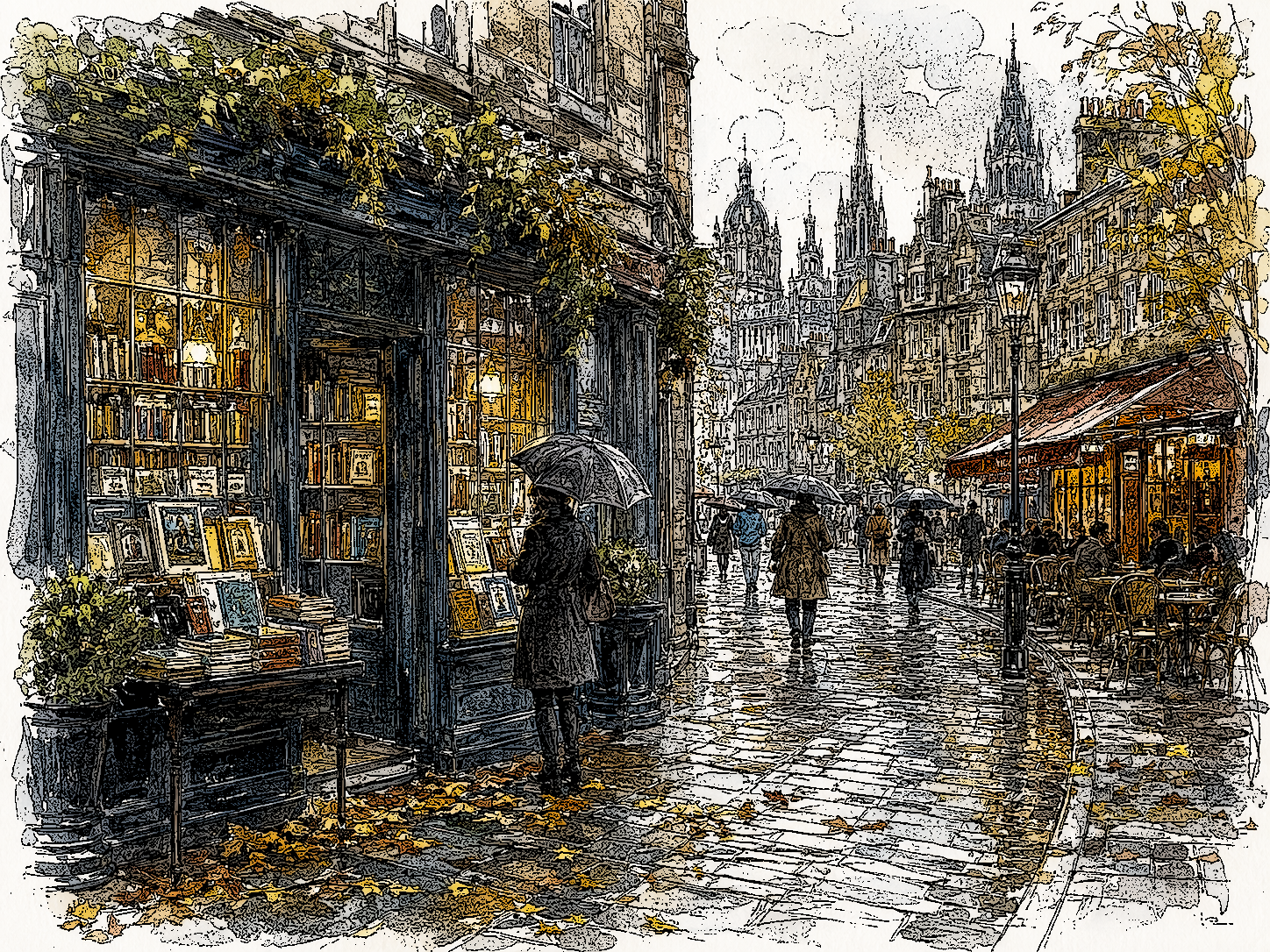
European winter travel has a very particular charm.
Cities glow differently. Historic streets feel sharper in the cold. Christmas markets bring warmth and light into old squares. Alpine landscapes become cinematic. Museums, concerts, cafés, thermal baths, and winter food all move higher up the itinerary. The season asks travellers to slow down a little, look closer, and let the journey itself become part of the experience.
That is one reason rail works so well in winter.
A flight moves people from one point to another. A train can hold the trip together. It connects cities, regions, landscapes, and experiences without constantly pushing travellers through airports, luggage carousels, coach parks, and long transfers. For the right route, rail can make a winter itinerary feel smoother, more atmospheric, and more coherent.
This is not only a romantic idea. Rail travel is gaining real attention across Europe. Mastercard’s 2026 travel trends report notes that train tourism is gathering momentum in Europe, supported in part by the EU’s Sustainable and Smart Mobility Strategy and its goal to double high-speed rail traffic by 2030.
For travel agents and tour operators, that matters. Rail is no longer just a transport detail. In winter, it can become part of the product.
Why Rail Works So Well For Winter Europe
Winter itineraries need a different kind of planning from summer itineraries.
The days are shorter. Weather matters more. Travellers need warmer clothing and more luggage. Outdoor touring windows may be smaller. Arrival timing, hotel location, station access, and transfer planning all become more important. A poorly paced winter trip can feel tiring quickly, especially if every city change involves airports, long coach movements, or awkward connections.
Rail can help solve some of that.
Many European train stations are located close to city centres, which makes arrivals easier for urban winter breaks. A traveller can arrive in Vienna, Zurich, Paris, Brussels, Prague, Munich, Amsterdam, or Copenhagen and already be much closer to the experience than they would be after landing at an airport outside the city.
For groups, this can reduce some of the dead time that creeps into winter itineraries. Instead of spending half a day moving between hotel, airport, check-in, security, flight, baggage reclaim, and transfer, a rail day can often become part of the programme.
That does not mean rail is always simpler. It needs careful routing, realistic connection times, luggage planning, and station support where necessary. But when it is planned properly, it can make a European winter trip feel less fragmented.

The Journey Becomes Part Of The Experience
Winter is one of the best seasons for scenic rail because the landscape does more of the work.
A route through Switzerland, Austria, Germany, Norway, Scotland, or Central Europe can become memorable before travellers even reach the next hotel. Snow-covered valleys, frozen lakes, mountain villages, rivers, forests, church spires, and evening city lights all help turn transfer time into travel time.
This is the great advantage of rail in winter: the window matters.
On a plane, Europe disappears below the clouds. On a train, it passes slowly enough to become part of the story.
That has real value for clients who want more than a checklist of cities. It is especially useful for FIT travellers, small groups, student groups, winter wellness itineraries, festive programmes, and culturally curious travellers who enjoy the movement between places as much as the places themselves.
Scenic Winter Rail Routes Worth Building Around
Europe has many strong rail routes, but not every scenic journey works the same way in winter. Some routes are panoramic centrepieces. Some are practical connectors with beautiful views. Some are best used as part of a wider multi-country itinerary.
The strongest winter rail planning begins by asking what role the train should play.
Is it the highlight of the trip? Is it the easiest way to connect two cities? Is it a scenic alternative to a domestic flight? Is it part of a slower, more atmospheric winter route?
Once that is clear, the right journey becomes easier to choose.
Switzerland: The Classic Winter Rail Powerhouse
Switzerland remains one of the clearest examples of winter rail done well.
The country’s rail network is reliable, scenic, and deeply integrated into the travel experience. It works for luxury travellers, FIT clients, groups, winter city breaks, Alpine extensions, and scenic journeys that can anchor an entire itinerary.
The Glacier Express is one of the best-known routes, linking Zermatt and St. Moritz across the Swiss Alps. The official Glacier Express information notes that the full journey takes around eight hours and operates on winter and summer timetables.
The Bernina Express is another major scenic option. The Rhaetian Railway describes the route from Chur through the UNESCO-listed Albula and Bernina landscapes, crossing 196 bridges and passing through 55 tunnels on the way toward Tirano in Italy.
For tour operators, the important point is not simply that these trains are famous. It is that they can be used in different ways.
A Swiss winter rail itinerary might focus on:
- Zurich, Lucerne, Interlaken, Zermatt, and St. Moritz
- Scenic rail as the main product
- Alpine wellness and spa hotels
- Non-ski winter experiences
- Christmas markets and city breaks
- Italy or Austria extensions
- Premium FIT or small-group travel
The key is pacing. Scenic rail can be extraordinary, but it should not be crammed into an itinerary just because the name is recognisable. The journey needs space around it.
Austria And Germany: Winter Cities, Alpine Access, And Festive Routes
Austria and Germany are especially strong for winter rail because they combine major cities, Christmas markets, classical culture, Alpine access, and efficient train links.
A winter route might connect Munich, Salzburg, Innsbruck, Vienna, Nuremberg, Dresden, Berlin, Cologne, or smaller regional towns depending on the theme. These places can work for festive markets, music, museums, history, food, and winter scenery.
Rail is particularly useful here because the cities are close enough to combine without making the trip feel like a logistical tug-of-war. A traveller can move from a Christmas market in Nuremberg to a concert in Vienna, from Munich to Salzburg, or from a German city break into the Alps with the journey still feeling like part of the itinerary.
This region also works well for groups because the experience can be layered. The train connects the route, but the value comes from what is built around it: walking tours, concerts, museum visits, market evenings, food experiences, palace visits, and scenic day trips.
Central Europe: Culture, Winter Atmosphere, And Easy City Pairings
Central Europe is one of the strongest regions for rail-led winter city breaks.
Prague, Vienna, Budapest, Bratislava, Kraków, Dresden, Leipzig, and Berlin can be combined in different ways depending on time, budget, and traveller interests. These cities work especially well in winter because they offer strong indoor cultural experiences alongside atmospheric streets and festive or seasonal programming.
For travellers who want Europe to feel historic, cultural, and walkable, Central Europe can be a good fit. Rail allows operators to create routes that feel logical rather than scattered.
This matters because winter travel is not only about snow. A strong winter city itinerary might include:
- Museums and galleries
- Classical music
- Jewish heritage
- Cold War history
- Architecture
- Food and café culture
- Christmas markets
- Thermal baths
- River cities
- University towns
Rail gives these themes a route. Without that route, the itinerary can become a list of cities. With it, the trip feels more deliberate.
The UK And Scotland: Winter Rail With Landscape And Story
Winter rail travel does not have to be limited to mainland Europe.
The UK and Scotland offer strong rail possibilities for travellers interested in heritage, cities, landscapes, theatre, literature, whisky, castles, and countryside. London can pair with York, Edinburgh, Glasgow, Bath, Oxford, Cambridge, the Lake District, or parts of Scotland depending on the route.
Scotland is particularly appealing for travellers who want dramatic winter landscapes without necessarily building the trip around skiing. Rail can support city and countryside combinations, including Edinburgh, Glasgow, Inverness, the Highlands, and scenic extensions where schedules and seasonality allow.
This is useful for EI because the UK is part of the company’s core destination offer. Winter rail can help position the UK as more than a summer or spring product.
It can become a strong cultural and atmospheric winter option.
Sleeper Trains: Useful, But Not For Every Client
Sleeper trains have re-entered the travel conversation in a big way.
They appeal to travellers who like the idea of covering distance overnight, reducing the need for short-haul flights, and making the journey part of the adventure. In Europe, ÖBB Nightjet and EuroNight services offer overnight routes using seating carriages, couchettes, and sleeper cabins, depending on route and availability.
European Sleeper has also been building interest around overnight train travel, including winter journeys between Brussels and Milan, positioned for access to Switzerland and the mountains.
For the right traveller, sleeper trains can be memorable and efficient. They can work well for younger travellers, rail enthusiasts, FIT clients, sustainability-minded travellers, and some small groups.
But they are not universally right.
A sleeper train may not suit clients who need guaranteed high comfort, large luggage capacity, mobility support, very quiet nights, or a highly predictable hotel-style experience. Cabin type, privacy level, luggage space, breakfast arrangements, arrival time, and station access all matter.
For operators, the important thing is to sell sleeper trains honestly. They can be magical. They can also be practical in a slightly rumpled, real-travel way. The difference between delight and disappointment often comes down to expectation-setting.
Is Rail Better Than Flying For Winter Europe Trips?
Sometimes, yes. Sometimes, no.
Rail is strongest when it connects city centres, reduces airport friction, adds scenic value, or supports a logical multi-city route. It is especially useful for winter city breaks, Christmas market itineraries, Alpine journeys, and regional travel where train stations are well located.
Flying may still make more sense for long distances, limited time, remote regions, island routes, or when rail connections are too complex for the client profile.
The better question is not whether rail is always better than flying.
The better question is:
Where does rail improve the actual experience of the trip?
If the train makes the journey smoother, more scenic, more comfortable, or more coherent, it should be considered. If it adds awkward connections, difficult luggage handling, or unrealistic travel days, it may not be the right choice.
Rail is a planning tool, not a personality test.

Winter Rail For Groups: The Practical Details Matter
Rail can work very well for groups, but it needs to be designed properly from the beginning.
A group does not move like an individual traveller. Boarding takes longer. Luggage creates friction. Meeting points matter. Some guests may need assistance. Seat reservations may be required. Platform changes can be stressful. Winter clothing and bags take up more space. The hotel needs to be practical for the station, not just attractive on a map.
For group rail itineraries, operators should think carefully about:
- Station location and hotel access
- Luggage handling
- Seat reservations
- Connection times
- Platform changes
- Coach support for station transfers
- Whether the group can board and exit comfortably
- Accessibility needs
- Meal timing around travel days
- Weather buffers
- Guide or tour leader support at stations
These details decide whether rail feels elegant or exhausting.
A winter rail itinerary should not depend on everyone sprinting across a station in boots and scarves with luggage bouncing behind them like panicked little suitcases.
The EU Is Trying To Make Cross-Border Rail Easier
One of the challenges of European rail travel has always been booking complexity, especially when a journey crosses borders or involves multiple operators.
In May 2026, the European Commission proposed new rules to simplify Europe-wide travel booking, particularly for cross-border rail journeys involving multiple operators, and to improve passenger protection across the full journey.
This does not mean every complex rail itinerary is suddenly simple. Operators still need to check schedules, tickets, reservations, passenger rights, and route reliability carefully.
But the policy direction is clear. Europe wants rail to become easier, more connected, and more attractive for travellers.
For the travel trade, this reinforces the value of developing better rail planning expertise now.
How To Build A Strong Winter Europe Trip By Train
A good winter rail itinerary begins with the experience, not the train timetable.
The route should make sense emotionally and operationally. It should not simply connect cities because a train exists between them. Every stop should earn its place.
A strong winter rail itinerary usually needs:
A Clear Theme
Is the trip about Christmas markets, Alpine scenery, culture, music, food, wellness, winter cities, or a combination of these? A clear theme helps prevent the itinerary from becoming a collection of unrelated stops.
Sensible Distances
Winter travel feels better when the route is not too stretched. Shorter and more logical train journeys usually create a better guest experience than ambitious cross-continent hops.
Central Hotels
Rail works best when hotels are well located for both the station and the city experience. A beautiful hotel far from the station may create more friction than it solves.
Realistic Luggage Planning
Winter luggage is bulkier. Groups need clear guidance and, where necessary, support with transfers and porterage.
Built-In Flexibility
Winter weather, rail disruptions, and short daylight hours all need to be considered. A good itinerary has buffers.
Strong Non-Rail Content
The train connects the experience. It should not be the only experience. Add food, culture, markets, museums, scenic walks, wellness, concerts, or local guides to give the route depth.
Where Winter Rail Travel Works Best
Winter rail travel can work across many parts of Europe, but it is especially strong in certain types of itinerary.
It works well for Christmas market routes, especially in Germany, Austria, France, Switzerland, Belgium, Czechia, and Central Europe.
It works well for Alpine journeys, particularly in Switzerland and Austria, where the train can be part of the scenic appeal.
It works well for multi-city winter breaks, especially where cities are close enough to connect comfortably.
It works well for culture-led itineraries, where museums, music, food, architecture, and heritage can anchor the trip during colder months.
It can also work well for slow travel and sustainability-led programmes, provided the route is practical and not only symbolic.
The common thread is simple: rail works best when it improves the flow of the trip.
The DMC View: Rail Needs Routing Intelligence
Winter rail travel in Europe has enormous appeal, but it should not be treated as automatically easy.
The right train can make an itinerary feel seamless. The wrong connection can make a travel day feel brittle. A scenic route can become a highlight. An overcomplicated rail day can drain the energy out of the programme before the group has even reached the next city.
This is where DMC support becomes valuable.
At Europe Incoming, we help travel partners build European itineraries that work on the ground, not only on a route map. That includes rail-friendly planning, realistic travel times, supplier coordination, hotel selection, group logistics, seasonal timing, and local support across Europe and the UK.
Because winter rail travel is not only about getting from one place to another.
It is about making the journey part of the reason to go.
FAQs About Winter Rail Travel In Europe
What Are The Best Winter Train Routes In Europe?
Some of the best winter train routes in Europe include Switzerland’s Glacier Express and Bernina Express, Alpine routes through Austria and Switzerland, Christmas market rail routes through Germany and Austria, Central European city routes linking Prague, Vienna, Budapest, Dresden, and Berlin, and scenic UK or Scotland rail journeys.
Can You Travel Europe By Train In Winter?
Yes. Many European rail routes operate throughout winter, although schedules, reservations, weather conditions, and seasonal services should always be checked. Winter rail can work especially well for city breaks, Christmas markets, Alpine routes, scenic journeys, and multi-city cultural itineraries.
What Are The Most Scenic Rail Journeys In Europe?
Some of Europe’s most scenic rail journeys include the Glacier Express, Bernina Express, routes through the Swiss and Austrian Alps, Norway’s mountain and fjord routes, Scotland’s Highland rail journeys, and selected scenic routes through Germany, Central Europe, and the UK.
Is Rail Better Than Flying For Winter Europe Trips?
Rail can be better than flying when it connects city centres, reduces airport transfers, supports a logical route, or adds scenic value to the trip. Flying may still be better for longer distances, remote regions, island routes, or itineraries with limited time.
Are Sleeper Trains Good For Winter Travel In Europe?
Sleeper trains can work well for some winter itineraries, especially for FIT travellers, younger travellers, rail enthusiasts, and clients who enjoy the experience of overnight travel. They need careful expectation-setting around cabin type, luggage, privacy, comfort, and arrival times.
Is Winter Rail Travel Good For Groups?
Yes, but groups need careful rail planning. Seat reservations, luggage, station transfers, hotel location, platform movement, accessibility, and connection times all need to be considered. Rail works best for groups when the itinerary is built around it from the start.
Why Use A DMC For Winter Rail Itineraries?
A DMC can help assess whether a rail route works in practice, not just on paper. This includes realistic travel timing, station logistics, hotel location, guide coordination, supplier planning, winter contingencies, and route design across Europe and the UK.