There are some ingredients that sit quietly on a menu, and there are others that change the entire mood of a season.
Truffles belong in the second category.
They are earthy, elusive, expensive, deeply local, and slightly theatrical without trying to be. They come with dogs, woods, damp soil, village markets, long lunches, handwritten menus, and the kind of regional pride that cannot be replicated by importing a jar of truffle oil into a hotel buffet.
For travellers, truffle season offers something autumn does especially well: a reason to slow down and pay attention to place.
For travel agents and tour operators, it is a useful seasonal hook. Truffles can add depth to autumn itineraries that might otherwise rely only on wine, foliage, museums, or “fewer crowds” as the main selling point. They make food travel feel specific. They create a reason to choose Piedmont over a generic Italy route, Istria over a standard Croatia coastal itinerary, or Provence beyond its summer lavender story.
The best part is that truffle travel does not have to be precious or overly formal. It can be luxurious, yes, but it can also be rustic, outdoorsy, local, educational, and wonderfully atmospheric. Done properly, it gives travellers a taste of Europe that is tied to soil, season, and story.
Why Truffle Season Works So Well As An Autumn Travel Hook
Autumn travel in Europe has many strong arguments. The weather is often more comfortable. Crowds are usually easier to manage than in peak summer. Food and wine become richer. Cultural calendars return to life. Countryside regions begin to feel more layered.
Truffle season pulls all of that into one clear experience.
A truffle itinerary is not just about eating something expensive. It is about understanding why certain landscapes produce certain flavours, why local knowledge matters, why timing is important, and why food can be one of the most meaningful ways to experience a region.
There is also a natural sense of theatre to truffle hunting. Travellers go into the woods with a guide and a trained dog. They learn how truffles grow, why they are difficult to find, how they are handled, and how quickly they move from earth to table. It is sensory, seasonal, and rooted in a place rather than staged in a room.
That matters for modern travel. Many clients are not only looking for attractions. They are looking for access, context, and experiences that feel connected to local life.
A truffle-focused autumn trip can bring together:
- Woodland walks and guided hunts
- Village markets and seasonal fairs
- Long lunches and tasting menus
- Wine pairings
- Cooking classes
- Hill towns and countryside stays
- Food producers and family-run restaurants
- Autumn landscapes
- Regional history and local storytelling
The truffle may be the hook, but the real product is the place around it.
When Is Truffle Season In Europe?
There is no single truffle season across Europe.
Different types of truffles appear at different times, and the timing depends on the region, weather, soil, rainfall, temperature, and local regulations. That is why operators need to be careful with broad promises. “Truffle season” can mean different things in Piedmont, Tuscany, Istria, Provence, or the Dordogne.
In general, autumn is the most famous season for white truffles, especially in regions such as Piedmont, Tuscany, and Istria. Some black truffles are also found in autumn, while the celebrated black Périgord truffle is usually more of a late autumn and winter product. France’s agriculture ministry notes that the black Périgord truffle is harvested from late November until early March in the best years, especially in southern France.
This makes timing important.
A client travelling in late September may have a different experience from a client travelling in late November. A trip planned around white truffle fairs may sit in October or November. A black truffle itinerary in France may work better from late November into winter.
For tour operators, the safer approach is to plan around the broader culinary season, then confirm specific hunts, fairs, menus, and producer access locally.
Truffles are not clockwork. They are tiny underground divas with weather-dependent schedules.
Why Truffle Travel Is About More Than The Hunt
Truffle hunting is often the headline experience, but it should not be the whole itinerary.
A hunt can be fascinating, but the strongest truffle travel also includes what happens before and after: the landscape, the people, the food, the villages, the market, the wine, and the meal that brings everything together.
In Italy, truffle hunting has cultural significance beyond tourism. UNESCO inscribed “Truffle hunting and extraction in Italy, traditional knowledge and practice” on the Representative List of the Intangible Cultural Heritage of Humanity in 2021, describing it as a set of orally transmitted knowledge and practices that continue to characterise rural life in parts of the Italian peninsula.
That is an important distinction for operators.
This is not just a novelty activity. In the right region, truffle hunting connects to living rural traditions, family knowledge, local economies, food culture, and seasonal rhythms. That gives the experience more weight, especially for clients who want culinary travel with substance rather than another tasting squeezed between two coach transfers.
Piedmont: The Classic Autumn Truffle Destination
If there is one European region most closely associated with autumn truffle travel, it is Piedmont.
The town of Alba and the surrounding Langhe, Roero, and Monferrato landscapes are famous for the white truffle, but the region’s appeal goes much further than that. Piedmont gives travellers wine, hill towns, hazelnuts, rich food, elegant city-countryside combinations, and some of Italy’s most compelling autumn scenery.
The International Alba White Truffle Fair is one of the major fixtures of the season. The official Langhe Monferrato Roero tourism site lists the 2026 fair from 10 October to 6 December 2026.
For travel planning, Alba can work as the centrepiece, but it should not carry the entire trip alone. A stronger Piedmont itinerary might include Turin, Alba, Barolo, Barbaresco, the Langhe hills, hazelnut producers, wine estates, historic villages, cooking experiences, and seasonal restaurants.
Piedmont is especially strong for clients who want:
- White truffle experiences
- Serious food and wine
- Barolo and Barbaresco wine country
- Autumn countryside
- Elegant but grounded Italian travel
- A less obvious alternative to Tuscany
- Strong regional identity
For luxury FIT travellers, Piedmont can be very strong because it allows access to boutique stays, fine dining, private experiences, and carefully chosen producers. For small groups, it works well when the itinerary is paced slowly enough to let the region breathe.
A rushed Piedmont truffle itinerary misses the point. This is a region for long lunches, winding roads, cellar visits, and the kind of autumn travel that does not need to shout.

Tuscany: Truffles, Hill Towns And A Softer Autumn Route
Tuscany is already a familiar destination for many travellers, but truffle season gives operators a more specific reason to sell it in autumn.
The region is not only Florence, Siena, Chianti, and postcard countryside. In autumn, Tuscany becomes a food landscape: truffles, wine, olive oil, mushrooms, chestnuts, game, pecorino, handmade pasta, markets, and small-town festivals.
San Miniato is one of the best-known Tuscan truffle towns. Visit Tuscany notes that its National White Truffle Exhibition is typically held over three weekends in November, bringing together gourmands, professional buyers, curious tasters, open-air events, and truffle-based menus.
This makes Tuscany useful for several traveller types.
For first-time Italy clients, truffle experiences can sit alongside Florence, Siena, Lucca, Pisa, Chianti, Val d’Orcia, or countryside stays. For repeat Italy travellers, a truffle-led route can move the focus away from the classic art-city circuit and into local food, smaller towns, and seasonal travel.
A good Tuscan truffle itinerary might include:
- Florence or Pisa as gateway cities
- San Miniato for white truffle experiences
- Wine regions such as Chianti, Montalcino, or Montepulciano
- Cooking classes or farmhouse lunches
- Olive oil tasting in late autumn
- Hill towns and scenic drives
- Seasonal restaurant menus
- Small-group truffle hunts where appropriate
Tuscany is also a good reminder that truffle travel does not have to be narrow. It can be layered into a broader autumn food and culture itinerary.
Istria: The Adriatic’s Strongest Truffle Story
Istria is one of the most useful truffle destinations for tour operators looking beyond the obvious.
The region sits across Croatia, with cultural and culinary links into Slovenia and Italy, and it offers a distinctive mix of hill towns, forests, coast, olive oil, wine, truffles, seafood, and slower off-season travel. It is especially useful because it can help reposition Croatia away from a purely summer coastal story.
The Istria Tourist Board describes autumn in Istria as a time when the region lives in the rhythm of truffles, with events dedicated to the ingredient across the season. It also notes that the peak season for white truffle is October, with most events connected to truffles organised between September and November.
This is a strong planning window.
Motovun, Livade, Buzet, and the Mirna Valley are particularly important in the Istrian truffle story. The Istria Tourist Board identifies the Motovun Forest in the Mirna River valley as the truffle epicentre of Istria and highlights Buzet’s reputation as the “Town of Truffles.”
For operators, Istria works well because the region is compact enough to combine experiences without making the itinerary feel heavy. A traveller can move between inland truffle country, coastal towns, wine and olive oil producers, Roman heritage in Pula, Venetian-style towns such as Rovinj, and regional restaurants.
Istria is ideal for clients who want:
- Truffle hunting in autumn
- Food and wine without the obvious Italy route
- Croatian and Adriatic travel beyond beaches
- Hill towns and coastal scenery
- Olive oil, wine, seafood, and local taverns
- A quieter seasonal alternative to peak summer Croatia
It also pairs well with Slovenia, northern Italy, or a wider Adriatic itinerary.
Slovenia And The Wider Istrian Route
Slovenian Istria can be a useful addition for operators building a compact food-focused route.
While Croatia’s Istrian truffle story is more widely recognised internationally, Slovenian Istria offers coastal towns, inland villages, olive oil, wine, salt pans, and truffle-related experiences that can fit neatly into a wider Slovenia or Adriatic programme. VisitSlovenia.com lists truffle hunting experiences in Istria that include hunting, cooking, and tasting with local specialists.
This route can be especially attractive for travellers who want variety without long distances. Ljubljana, Lake Bled, the Karst, Piran, Koper, Slovenian Istria, and Croatian Istria can be combined carefully depending on time and budget.
For EI, the broader opportunity is to frame this region as food-rich, culturally layered, and excellent for shoulder-season travel. It is not a fallback to Italy. It has its own identity.
France: Provence, Périgord And The Winter Bridge
France’s truffle story behaves a little differently because many of its strongest black truffle experiences lean toward late autumn and winter.
That makes France useful as a bridge between autumn food travel and early winter culinary travel. Instead of ending the food travel conversation after wine harvest season, operators can move into black truffle markets, winter menus, and regional gastronomy.
France’s consumer protection and economy ministry identifies several truffle-producing zones across the country, including the southwest, southeast, centre, and eastern regions. Provence-Alpes-Côte d’Azur Tourism highlights truffle-related markets in the region, including Richerenches, Rognes, Aix-en-Provence, and Carpentras, and notes truffle discovery experiences from November into March.
This gives operators several possibilities.
Provence can be sold beyond summer lavender and coastal glamour. In late autumn and winter, it becomes quieter, more local, and more food-led. Périgord and the Dordogne can work for clients interested in black truffles, markets, villages, duck, walnuts, wine, caves, and rural heritage. Burgundy and other eastern regions can also connect truffles with wine, gastronomy, and heritage travel.
For France, the key is timing. A classic autumn truffle trip may fit better in Italy or Istria, while French black truffle travel may be stronger from late November into winter.
The Best Autumn Food Experiences Around Truffle Travel
Truffle season becomes much more compelling when it is connected to other seasonal food experiences.
Autumn is not a one-ingredient season. It is when many European regions become especially interesting to eat through. Depending on the destination, truffle travel can sit alongside wine harvest, olive oil, mushrooms, chestnuts, game, cheese, hazelnuts, apples, pears, figs, walnuts, and seasonal markets.
This gives operators a richer itinerary structure.
Instead of building a trip around one truffle hunt, the programme can follow a broader food trail. For example:
- Piedmont: white truffles, Barolo, Barbaresco, hazelnuts, tajarin, vitello tonnato, and Turin cafés
- Tuscany: truffles, Chianti or Brunello, olive oil, pecorino, pasta, and hill towns
- Istria: truffles, Malvasia, Teran, olive oil, seafood, hill towns, and coastal villages
- Provence: black truffles, markets, olive oil, wine, herbs, and quieter village life
- Périgord: black truffles, walnuts, duck, markets, caves, and medieval towns
This is where autumn culinary travel becomes more resilient. If weather shifts or a hunt is less productive than hoped, the itinerary still has depth.
The truffle does not have to do all the work.
How To Build A Truffle-Focused Itinerary That Actually Works
The easiest mistake is to build the itinerary as if truffle hunting is a simple activity that can be slotted into any free morning.
It is not quite that tidy.
A strong truffle itinerary needs local coordination, realistic expectations, and a proper understanding of the client. The experience that works for two luxury FIT travellers may not work for a 40-person group. A muddy woodland hunt may delight one client and horrify another. A serious culinary group may want depth, while a leisure group may simply want an atmospheric introduction followed by lunch.
Tour operators should consider:
- Whether the client wants a real hunt, a demonstration, a tasting, or a restaurant experience
- Whether the hunt is suitable for the group’s mobility and footwear
- Whether dogs are used and how the experience is explained
- Whether the activity can operate in poor weather
- Whether the truffle found is actually used in the meal
- How alcohol, wine tasting, and transfers are managed safely
- Whether non-drinking or non-truffle alternatives are needed
- Whether the experience is authentic or overly staged
- Whether the timing matches the actual local season
The difference between a memorable truffle experience and a gimmick is often in the details.
Matching Truffle Regions To Traveller Types
Truffle travel is surprisingly flexible, but each region suits a different kind of client.
Piedmont is excellent for food-and-wine travellers who want depth, prestige, and a strong sense of autumn Italy. It works well for luxury FIT, small groups, culinary travellers, and incentive-style programmes where dining is central.
Tuscany is ideal for clients who want truffles as part of a broader Italian experience. It is a natural fit for first-time Italy travellers, wine lovers, slow travel clients, and groups who want food without losing access to famous cultural cities.
Istria is strong for clients who want something fresher, more regional, and less obvious. It works beautifully for food-focused Croatia, Adriatic combinations, small groups, and travellers who like the idea of inland villages paired with the coast.
Provence and Périgord suit travellers who enjoy markets, rural France, winter food, slower touring, and the black truffle season. These are especially useful for clients who already know France and want something more seasonal and intimate.
Slovenia and cross-border Istrian routes work well for clients who want variety, compact routing, and a mix of food, nature, coast, and culture without relying on the most predictable European names.
The region should match the traveller’s appetite, not just their appetite for truffles.
The Commercial Opportunity For Tour Operators
Truffle season gives operators a useful way to sell autumn Europe as a first-choice product.
It helps move the conversation away from weather alone. Instead of saying, “Autumn is less crowded,” operators can say, “This is when the region becomes most interesting to taste.”
That is a stronger message.
It also creates opportunities for:
- Premium FIT itineraries
- Culinary small groups
- Special-interest tours
- Wine and food combinations
- Incentive travel
- Alumni and cultural groups
- Repeat travellers looking for something new
- Shoulder-season Europe products
- Regional itineraries beyond the obvious cities
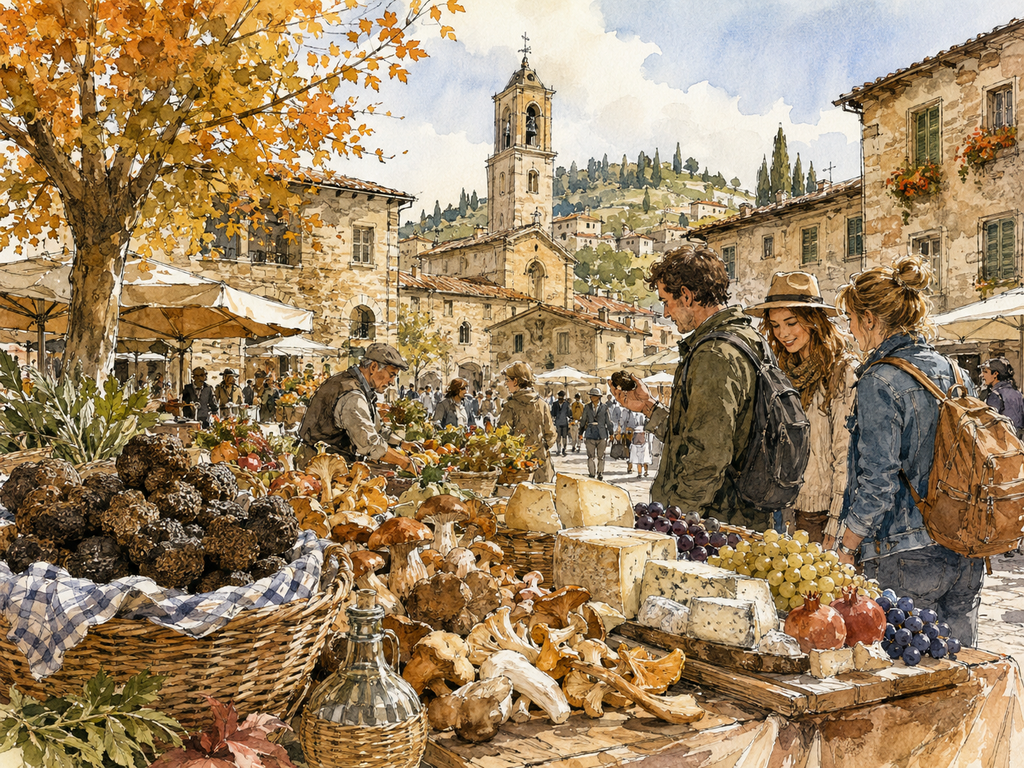
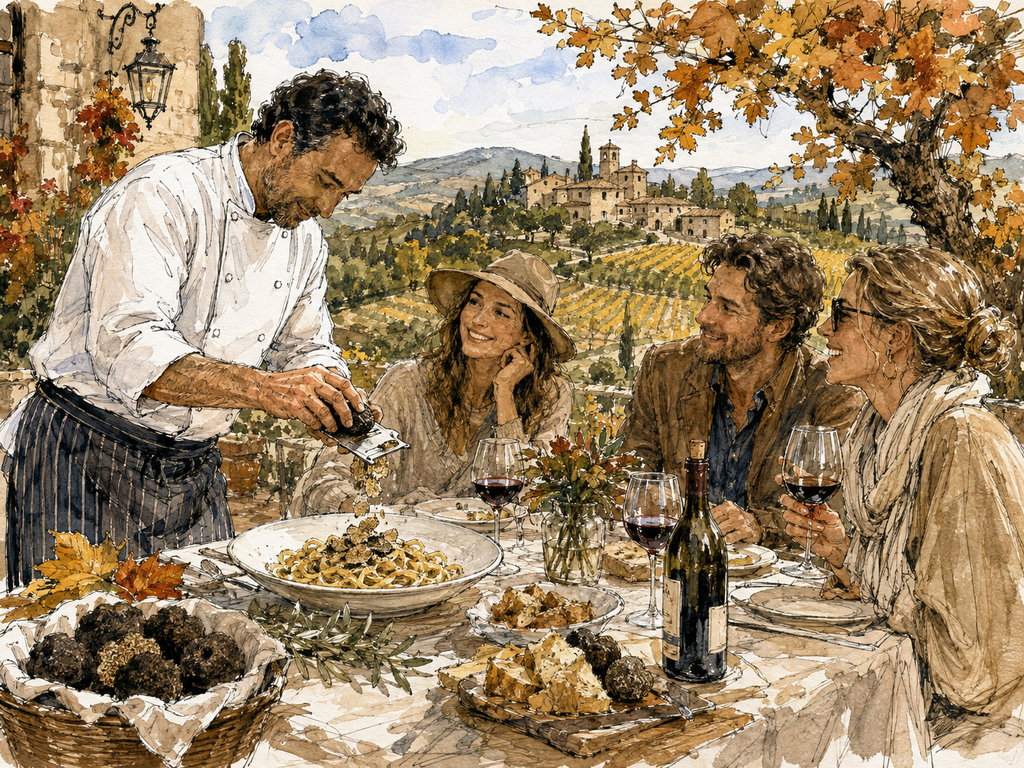
Truffle travel also photographs well, tells well, and sells well when handled with care. A dog in the woods, a village market, a white truffle shaved over pasta, a hill town in autumn light, a cellar lunch after a morning hunt. These are not empty brochure images. They are specific, seasonal, and memorable.
That specificity is the commercial value.
The DMC View: Truffle Season Needs More Than A Restaurant Booking
Truffle season can make autumn Europe feel richer, but it needs careful planning.
The season shifts. Local regulations matter. Harvest conditions vary. Some experiences are authentic and excellent; others are thinly dressed tourist theatre. Group logistics can be difficult in rural areas. Restaurants and small producers need early coordination. The right region depends on the traveller, the month, the route, and the desired level of comfort.
At Europe Incoming, we help travel partners build food and wine itineraries that are rooted in place rather than sprinkled with seasonal buzzwords. That includes truffle regions, harvest experiences, regional routing, supplier coordination, local guides, dining, accommodation, and practical support across Europe and the UK.
Because truffle season is not only about finding something hidden under the soil.
It is about revealing the deeper flavour of a destination.
FAQs About Truffle Season In Europe
When Is Truffle Season In Europe?
Truffle season in Europe depends on the type of truffle and the region. White truffle season is most strongly associated with autumn, especially September to November or early winter in regions such as Piedmont, Tuscany, and Istria. Black Périgord truffle season in France is generally from late November to early March in good years.
Where Can You Go Truffle Hunting In Europe?
Strong truffle hunting destinations in Europe include Piedmont, Tuscany, Umbria and other parts of Italy, Istria in Croatia, Slovenian Istria, Provence, Périgord, and other French truffle regions. The right destination depends on season, access, group size, and whether travellers want a real hunt, a tasting, a market visit, or a broader culinary itinerary.
Is Piedmont Good In Autumn?
Yes. Piedmont is one of Europe’s strongest autumn food and wine destinations. It is especially known for white truffles around Alba, Barolo and Barbaresco wines, hazelnuts, rich regional cuisine, hill towns, and beautiful countryside. The International Alba White Truffle Fair makes October and November especially attractive for culinary travel.
What Are The Best Autumn Food Experiences In Europe?
The best autumn food experiences in Europe include truffle hunting, wine harvest travel, olive oil tasting, mushroom and chestnut festivals, seasonal markets, cooking classes, game menus, cheese producers, food festivals, and long regional lunches built around local ingredients.
Is Truffle Hunting Suitable For Groups?
It can be, but it needs careful planning. Some truffle hunting experiences are best for small groups because of terrain, guide capacity, dogs, and woodland access. Larger groups may need a demonstration, tasting, market visit, or restaurant-led experience instead of a full hunt.
Is Truffle Season Only For Luxury Travellers?
No. Truffle season can work for luxury travellers, but it can also suit culinary groups, cultural travellers, FIT clients, educational groups, and repeat Europe travellers looking for a more seasonal experience. The key is matching the format to the client.
How Should Tour Operators Sell Truffle Season In Europe?
Tour operators should sell truffle season as a place-based autumn experience, not just a food trend. The focus should be on regional culture, local guides, forests, markets, seasonal menus, wine pairings, and the chance to experience Europe’s culinary regions at one of their most distinctive times of year.